

Why Do We Turn Ordinary People into Heroes or Villains?
The Psychology Behind Political Polarization, Hero Worship, and Human Bias. How can intelligent people look at the same person, the same facts, and yet arrive at completely opposite conclusions?
Dr AMBIKA and Y SIDHARTH
7/27/20266 min read
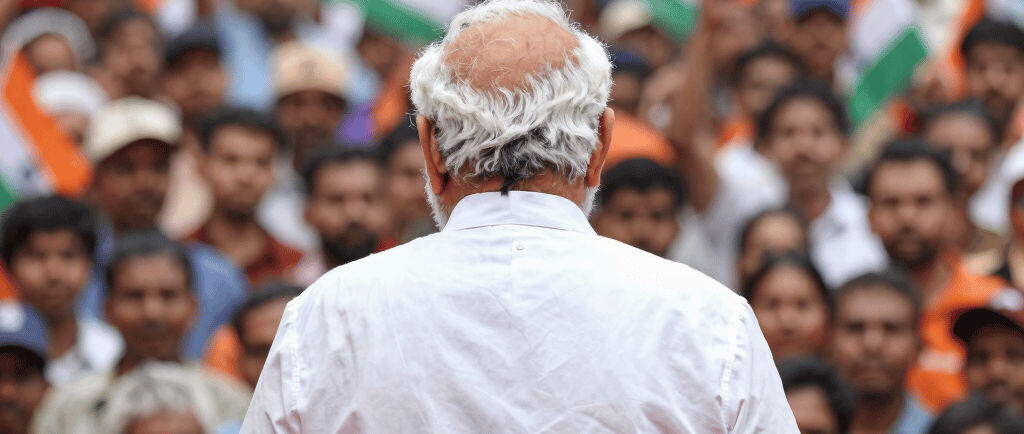
The Psychology Behind Political Polarization, Hero Worship, and Human Bias
"He's completely corrupt and has never done a single good thing."
If you've ever listened to a political debate, watched discussions about a cricket star, or followed conversations about a film celebrity, you've probably heard statements like these.
What's fascinating is that both opinions are often expressed about the same person.
To one group, he is a visionary. To another, he is a villain.
One actor is admired as an icon by millions, while others dismiss him as arrogant and overrated.
A cricketer is celebrated as a national hero by some and criticized relentlessly by others.
The obvious question is:
How can intelligent people look at the same person, the same facts, and yet arrive at completely opposite conclusions?
The answer lies not in politics, religion, or culture alone. It lies in human psychology.
We do not see reality exactly as it is.
We see reality through the lens of our experiences, emotions, beliefs, identities, and expectations.
Swiss psychiatrist Carl Jung expressed this beautifully:
"We do not see things as they are; we see them as we are."
This simple idea explains much of the division we witness—not only in India but across the world.
# The Human Brain Prefers Simplicity Over Truth
Most of us like to believe that our opinions are based on logic.
Psychological research suggests otherwise.
Every day, our brains process an overwhelming amount of information. Carefully analyzing every piece of evidence would be mentally exhausting. To cope, the brain relies on mental shortcuts, known as heuristics.
These shortcuts help us make quick decisions.
Most of the time, they serve us well.
But they also create predictable errors in judgment, known as cognitive biases.
These biases influence how we judge politicians, celebrities, athletes, religious figures, and even the people closest to us.
# The Indian Culture of Personality Worship
India has always celebrated extraordinary personalities.
We admire freedom fighters, spiritual leaders, political icons, film stars, sports legends, and social reformers.
There is nothing wrong with admiration.
The problem begins when admiration transforms into unquestioning devotion.
At that point, we stop evaluating actions.
Instead, we begin defending individuals.
Gradually, the person becomes more than a leader or celebrity.
He becomes part of our identity.
Once that happens, objectivity quietly disappears.
1. The Halo Effect
One of the most powerful psychological biases is called the Halo Effect.
When someone impresses us in one area, we unconsciously assume they must also possess many other positive qualities.
A charismatic politician is automatically perceived as honest.
A successful entrepreneur is assumed to be morally superior.
A famous actor is believed to be wise.
A brilliant athlete is expected to be a role model.
None of these conclusions necessarily follow.
Excellence in one domain does not guarantee excellence in another.
The opposite is called the Horn Effect. (While the Halo Effect makes us assume that a person has many positive qualities because of one good quality, the Horn Effect makes us judge a person negatively in every aspect because of one bad quality.)
One mistake causes us to ignore every good quality that person possesses.
2. Confirmation Bias
Imagine two friends reading exactly the same news report.
One already supports a particular political leader.
The other strongly opposes him.
After reading the article, the supporter says,
"The media is once again targeting him unfairly."
The critic replies,
"I knew this would happen sooner or later."
The article hasn't changed.
The facts haven't changed.
Only their interpretations have.
This is Confirmation Bias—our tendency to notice, remember, and believe information that supports what we already think, while dismissing evidence that challenges our beliefs.
Social media has amplified this tendency.
Algorithms feed us content similar to what we already like.
Over time, we begin living inside an echo chamber, surrounded by opinions that reinforce our existing worldview.
3. Social Identity Theory
Psychologist Henri Tajfel demonstrated that human beings derive a significant part of their identity from the groups to which they belong.
We identify ourselves through religion, language, caste, region, profession, political ideology, or nationality.
Eventually, certain public figures become symbols of those identities.
Criticizing the leader then feels like criticizing the group itself.
Political disagreements become deeply emotional because they are no longer about policies.
They are about identity.
4. Cognitive Dissonance
Suppose you have publicly supported a political leader for ten years.
You have defended him in conversations, on social media, and within your family.
Then compelling evidence emerges showing serious wrongdoing.
You now face two uncomfortable choices.
Either admit,
"Perhaps I was wrong."
Or convince yourself,
"The evidence must be false."
Most people choose the second option.
Not because they are dishonest, but because admitting a mistake threatens their self-image.
To reduce this psychological discomfort, they begin rationalizing.
"Everyone is corrupt."
"The media is biased."
5. Emotion Comes Before Reason
Many people believe they think first and feel later.
Neuroscientific research suggests the opposite.
Emotions often guide our judgments before logic enters the picture.
Once we emotionally like someone, our reasoning starts working like a lawyer rather than a judge.
Instead of asking,
"Is this true?"
It asks,
"How can I prove that my preferred conclusion is correct?"
Reason becomes the defender of emotion.
6. The "Us vs. Them" Mindset
Human beings naturally divide the world into two groups:
Us and Them.
This tendency appears across cultures.
In India, these identities may revolve around politics, religion, caste, language, region, or ideology.
When someone from "our" group makes a mistake, we explain it away.
When someone from the "other" group makes the same mistake, we attribute it to bad character.
Psychologists refer to this as the Fundamental Attribution Error.
We judge ourselves by our intentions.
We judge others by their actions.
7. Our Psychological Need for Heroes
Human beings are storytellers.
Every story needs heroes.
As children, our heroes are parents and teachers.
Later they become athletes, movie stars, entrepreneurs, spiritual leaders, or political figures.
Wanting role models is perfectly natural.
The danger arises when admiration becomes blind loyalty.
The moment someone becomes "beyond criticism," democracy, science, and rational thinking begin to suffer.
Every human being is capable of both wisdom and error.
Ignoring either side creates illusion.
# The Psychology of Indian Politics
Indian elections are rarely decided by facts alone.
They are influenced by identity, hope, fear, pride, security, aspirations, and emotion.
Political campaigns understand this remarkably well.
Speeches are designed not merely to communicate information but to evoke feelings.
That is why two people can hear the same speech and walk away with entirely different conclusions.
Their ears heard the same words.
Their minds interpreted different meanings.
# How Social Media Intensifies Bias
Years ago, people searched for news.
Today, news searches for people.
Digital algorithms quickly learn our preferences.
If we consistently engage with one viewpoint, we are shown even more of it.
Gradually, we begin believing that everyone thinks the way we do.
Anyone who disagrees starts appearing irrational, uninformed, or even dangerous.
This is how societies become increasingly polarized.
# Can Highly Intelligent People Be Biased?
Absolutely.
Intelligence and objectivity are not the same thing.
In fact, highly intelligent individuals are sometimes even better at defending their existing beliefs because they can construct more sophisticated arguments.
True objectivity requires something different:
Intellectual honesty.
The willingness to follow evidence, even when it challenges our most cherished beliefs.
# How Can We Train Ourselves to Think More Objectively?
Complete objectivity may be impossible.
Greater objectivity, however, is achievable.
Here are a few practical habits.
Separate the person from the action.
A good person can make a bad decision.
A flawed person can still make valuable contributions.
Avoid absolute labels.
Seek evidence that challenges your opinion.
Ask yourself:
"What evidence would convince me that I am wrong?"
If the answer is "nothing," your belief has become part of your identity rather than a reasoned opinion.
Listen to people you disagree with.
Understanding is not the same as agreeing.
But understanding is essential for wisdom.
Pause before forming conclusions.
One of the most powerful sentences in critical thinking is:
"I don't have enough information yet."
Evaluate behaviour, not personality.
Instead of asking,
"Do I like this leader?"
Ask,
"Was this decision ethical?"
"Was it effective?"
"What evidence supports this claim?"
These simple questions shift our attention from emotion to evidence.
# A Simple Story
Two men sat beneath the same tree.
One admired its beauty.
The other complained that it was lifeless and ugly.
An old traveler approached and asked,
"When did you see the tree?"
The first replied,
"In spring."
The second answered,
"In autumn."
The traveler smiled.
"The problem isn't the tree. The problem is that each of you saw only one season."
We often judge people the same way.
We define an entire life by a single speech, one scandal, one success, one failure, one social media post, or one news headline.
Human beings are more complex than any single moment.
# Final Thoughts
One of the greatest strengths of a democracy is not the freedom to support a leader.
It is the freedom to question even the leader we admire.
True respect is not blind agreement.
It is the courage to appreciate achievements while acknowledging mistakes.
Likewise, genuine criticism is not blind hatred.
It is the willingness to recognize good work even in those with whom we disagree.
No human being is entirely a hero.
No human being is entirely a villain.
Every individual is a mixture of strengths and weaknesses, wisdom and error, light and shadow.
Psychological maturity begins when we stop asking,
"Whose side are you on?"
and start asking,
"What does the evidence say?"
In an age of political polarization, social media outrage, and ideological division, that simple shift may be one of the most important habits we can cultivate.
Because the healthiest societies are not built by people who never disagree.
They are built by people who never stop thinking.