

When Words Control the Mind: A Psychological Explanation
One insult. One sentence. And suddenly your mind is stuck for hours, sometimes days. Here’s the truth: Words don’t hurt you. Your acceptance of them does. A harsh comment is just sound in the air—until you carry it inside and connect it to your self-worth. That’s when it turns into stress, anger, and mental exhaustion.
Y Sidharth, Dr Ambika
1/22/20263 min read
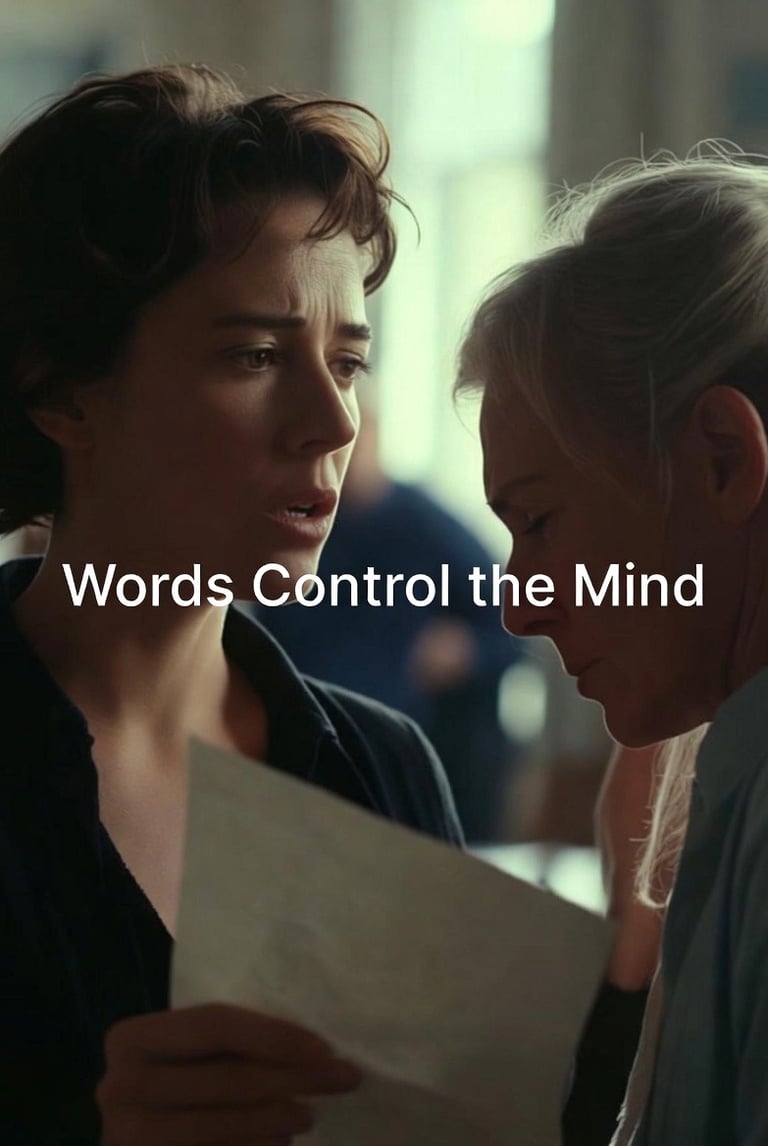

When Words Control the Mind: A Psychological Explanation
Someone abuses you.
Someone says one harsh line against you.
Objectively, it lasts a few seconds.
But subjectively, that single sentence can occupy your mind for hours, days— sometimes months. Your attention gets stuck there. Your energy drains. Sleep suffers. Peace disappears.
The real question is not why people speak badly.
The real question is:
Did the word trap you, or did you allow the word inside?
Words Do Not Hurt by Themselves
From a psychological point of view, words are not harmful on their own.
They become harmful only after the mind assigns meaning to them.
This process is called cognitive appraisal—the way your mind evaluates an event and decides:
Is this dangerous?
Is this an attack on my worth?
Does this threaten my identity?
If the mind concludes “This insult defines me”, the body reacts instantly:
stress hormones rise
emotions flare up
thoughts loop uncontrollably
The injury is not caused by the word.
It is caused by the interpretation of the word.
Why Does the Mind Keep Replaying One Insult?
The human brain has a built-in tendency called negativity bias.
Ten compliments fade quickly.
One insult sticks like glue.
Why?
Because the brain evolved to prioritize threats. Anything perceived as a threat to status, respect, or belonging gets stored and replayed.
But here’s the problem:
The threat ends outside,
but continues inside.
Psychology calls this rumination—repetitive, uncontrolled thinking about the same painful event without resolution.
Rumination does not solve problems.
It only consumes mental energy.
When Do Words Turn into Poison?
As long as words remain outside, they are harmless sounds.
They turn into poison only when:
You internalize them
You mix them with your self-worth
You start questioning yourself because of them
For example:
“You are useless.”
If the mind asks, “What if that’s true?”
The word has entered.
But if the mind says, “That reflects his state, not my reality.”
The word dies instantly.
The same word—two different outcomes.
How This Is Directly Related to Emotional Intelligence (EQ)
This entire issue sits at the core of Emotional Intelligence.
EQ is not about being calm all the time.
It is about handling emotional triggers without losing inner balance.
Let’s break it down:
1. Self-Awareness (EQ Skill #1)
High-EQ individuals notice:
“This sentence has triggered me.”
They don’t deny the emotion—but they also don’t drown in it.
Low EQ = becoming the emotion
High EQ = observing the emotion
2. Emotional Regulation (EQ Skill #2)
A person with strong EQ knows:
Emotions rise automatically
Reactions are optional
They pause before reacting, instead of letting the insult hijack their behavior or mood.
3. Detachment from External Validation (EQ Skill #3)
Low EQ ties self-worth to others’ words.
High EQ anchors self-worth internally.
That’s why the same insult can:
destroy one person
bounce off another
The difference is not toughness.
The difference is emotional maturity.
Remedies: How to Stop Words from Hijacking Your Mind
This is not about suppression.
It’s about mental training.
1. Separate the Word from the Speaker
Ask one question:
“What emotional state produced this sentence?”
Most insults come from:
anger
insecurity
frustration
ego injury
This instantly reduces personal impact.
2. Label the Process
Instead of saying:
“I am disturbed.”
Say:
“My mind is ruminating.”
Labeling creates distance.
Distance restores control.
3. Refuse Mental Rehearsal
Each replay strengthens the emotional circuit.
Say internally:
“I will not rehearse this.”
Then deliberately shift attention—walk, write, breathe, move.
Attention is energy.
Withdraw it consciously.
4. Strengthen Inner Authority
Build a habit of self-validation:
journaling facts, not emotions
reminding yourself of real competence
grounding self-worth in actions, not opinions
When inner authority is strong, outer noise weakens.
5. Accept the Emotion, Reject the Story
Emotion is natural.
The story attached to it is optional.
Feel the anger.
Do not feed the narrative.
This single skill dramatically increases EQ.
The Core Truth
The world will speak.
People will insult, judge, and project.
But only accepted words gain power.
What truly defines emotional intelligence is not silence or aggression—it is selective internal permission. Guard not your ears. Guard your inner space. Because the words that could have vanished in the air become fire only when the mind gives them a home.