

NATURE AND FUNCTION OF MIND
Understanding the nature and function of our mind is indeed crucial for using it in the most appropriate way. Just like any other tool or instrument, knowing how our mind works and what its capabilities and limitations are enables us to harness its potential effectively.
SIDHARTH
8/6/20234 min read
NATURE AND FUNCTION OF MIND
The nature of the mind is a topic that has fascinated philosophers, scientists, and thinkers for centuries. Understanding the nature of the mind involves exploring its essential characteristics, functions, and relationship with consciousness, perception, and cognition. In this essay, we will delve into the multifaceted nature of the mind and illustrate its complexities with relevant examples.
Introduction:
The mind is an intangible and elusive entity that lies at the core of human experience. It encompasses a vast array of mental processes, including perception, cognition, emotion, memory, and consciousness. It is through the mind that we interact with the world, process information, and construct our understanding of reality. While the mind is deeply intertwined with the brain's physical processes, it extends beyond mere neurobiological functions, encapsulating the totality of human consciousness.
The Dualistic and Monistic Perspectives:
The nature of the mind has been a subject of philosophical debate, giving rise to two primary perspectives: dualism and monism.
Dualism: Dualism posits that the mind and the physical body are distinct and separate entities. René Descartes, a prominent dualist, famously stated, "Cogito, ergo sum" (I think, therefore I am), emphasizing the autonomy of the mind from the physical realm. According to dualism, the mind is non-physical, immaterial, and possesses qualities that are fundamentally different from the material world.
Monism: Monism, on the other hand, contends that the mind and body are inseparable and interconnected. Within monism, there are two main subcategories:
Materialistic Monism (Physicalism): Materialistic monism posits that the mind arises solely from the physical processes of the brain. In this view, mental phenomena, such as thoughts and emotions, are the result of neural activities and biochemical reactions.
Idealistic Monism (Idealism): Idealistic monism asserts that the physical world, including the brain, is a manifestation of the mind. In this perspective, consciousness is the primary reality, and the physical world is a product of the mind's perceptions and interpretations.
The Embodied Mind:
Recent developments in cognitive science and neuroscience have led to a perspective known as the "embodied mind." This view recognizes that the mind is not solely confined within the brain but is intricately connected to the entire body and its interaction with the environment.
Embodied cognition proposes that our cognition and understanding of the world are deeply influenced by the body's sensory-motor experiences. For instance, research has shown that bodily movements and gestures play a vital role in language comprehension and communication. When we understand the phrase "raising a hand" to indicate agreement, it is because of the embodied experiences associated with the action of raising one's hand in agreement.
The Functional Nature of the Mind:
Another essential aspect of the mind's nature is its functional character. The mind performs a diverse range of functions that are critical to human experience:
Perception: The mind is responsible for processing sensory information from the environment, allowing us to perceive and make sense of the world. For example, when we see a red apple, the mind processes the visual data and recognizes it as a familiar object.
Cognition: Cognition encompasses a broad set of mental processes, including thinking, reasoning, problem-solving, decision-making, and creativity. When we contemplate a complex issue, engage in logical reasoning, or devise innovative solutions, we are employing cognitive functions of the mind.
Emotion: Emotions are an integral part of the mind's nature. They influence our perceptions, judgments, and behaviors. For instance, feelings of fear can trigger the fight-or-flight response, preparing the body to respond to potential threats.
Memory: Memory is the mind's ability to store and retrieve information from past experiences. Memory plays a crucial role in learning, as it enables us to draw on prior knowledge and build upon it.
Consciousness: Consciousness is perhaps the most enigmatic aspect of the mind. It refers to our subjective awareness of ourselves and the world around us. The nature of consciousness has been a subject of intense inquiry, with questions about its origins and underlying mechanisms.
Example: Mind and Perception in Optical Illusions
An illustrative example of the mind's nature in action can be found in optical illusions. Optical illusions are visual phenomena that challenge our perceptual systems, revealing the intricate relationship between the mind and perception.
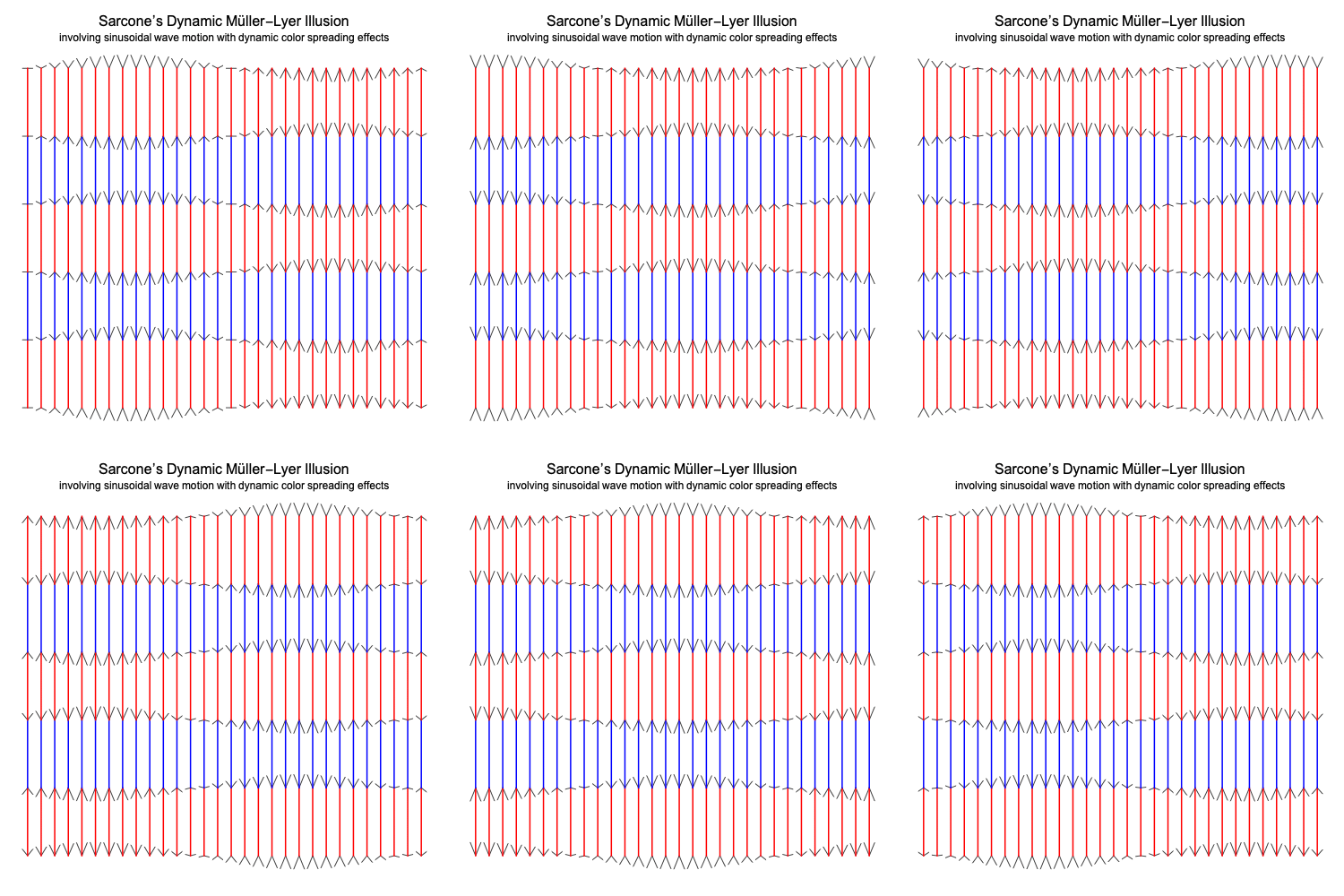
One famous optical illusion is the Müller-Lyer illusion, which consists of two lines with arrow-like tails pointing in different directions. Despite the lines being of the same length, the one with outward-pointing arrows appears longer than the one with inward-pointing arrows. This discrepancy occurs because the mind processes the context and interprets the lines based on their perceived depth in the scene.
The Müller-Lyer illusion demonstrates how the mind's perception can be influenced by contextual cues and preconceived notions. Even when we are aware of the illusion, our mind still perceives the lines as unequal in length, emphasizing the powerful role the mind plays in shaping our understanding of the world.
Conclusion:
In conclusion, the nature of the mind is a complex and multifaceted concept that encompasses various perspectives, including dualism, monism, and embodied cognition. The mind is not confined solely to the brain but extends throughout the body and is intimately intertwined with our sensory-motor experiences. Its functions, including perception, cognition, emotion, memory, and consciousness, are fundamental to our existence and shape our understanding of reality. Through examples like optical illusions, we gain insight into how the mind interprets the world, often influenced by context and prior knowledge. As our understanding of neuroscience and cognitive science continues to evolve, the exploration of the mind's nature promises to be an ongoing and captivating journey of discovery.